
Search Taylor County Dissolution Of Marriage
If you need Taylor County Dissolution Of Marriage records, the search usually starts with the clerk of circuit court and then moves to WCCA, the register of deeds, or the state vital records office depending on the document you want. Some requests are just a case lookup. Others need a certified decree, a certificate, or the full family file with motions and final orders. Taylor County keeps those records in different places, so it helps to know the route before you start. This page pulls the county and state paths together so you can confirm the case and request the right record without guessing first.
Taylor County Dissolution Of Marriage Records
The Taylor County Clerk of Circuit Court is the official custodian of Taylor County Dissolution Of Marriage case files. That office keeps the court record, the docket trail, and the papers filed in the case. It is also the place to ask for certified copies of divorce decrees. When you need the real file, the clerk is the office that can pull it. That matters because a WCCA search gives you a summary, not the document images. The summary can confirm the parties, the case type, and the status, but it will not show the filed papers themselves.
For a first pass, use Wisconsin Circuit Court Access. Choose Taylor from the county dropdown and search by party name or case number. The portal generally covers cases filed after July 1, 2001, and it still helps when you do not have the file number yet. Public access terminals in clerk offices can also help when you want to review a case summary in person before you ask for copies. If the case is older, archived, or light on detail online, the clerk office remains the place that holds the complete record.
Source page: Taylor County legal resources.
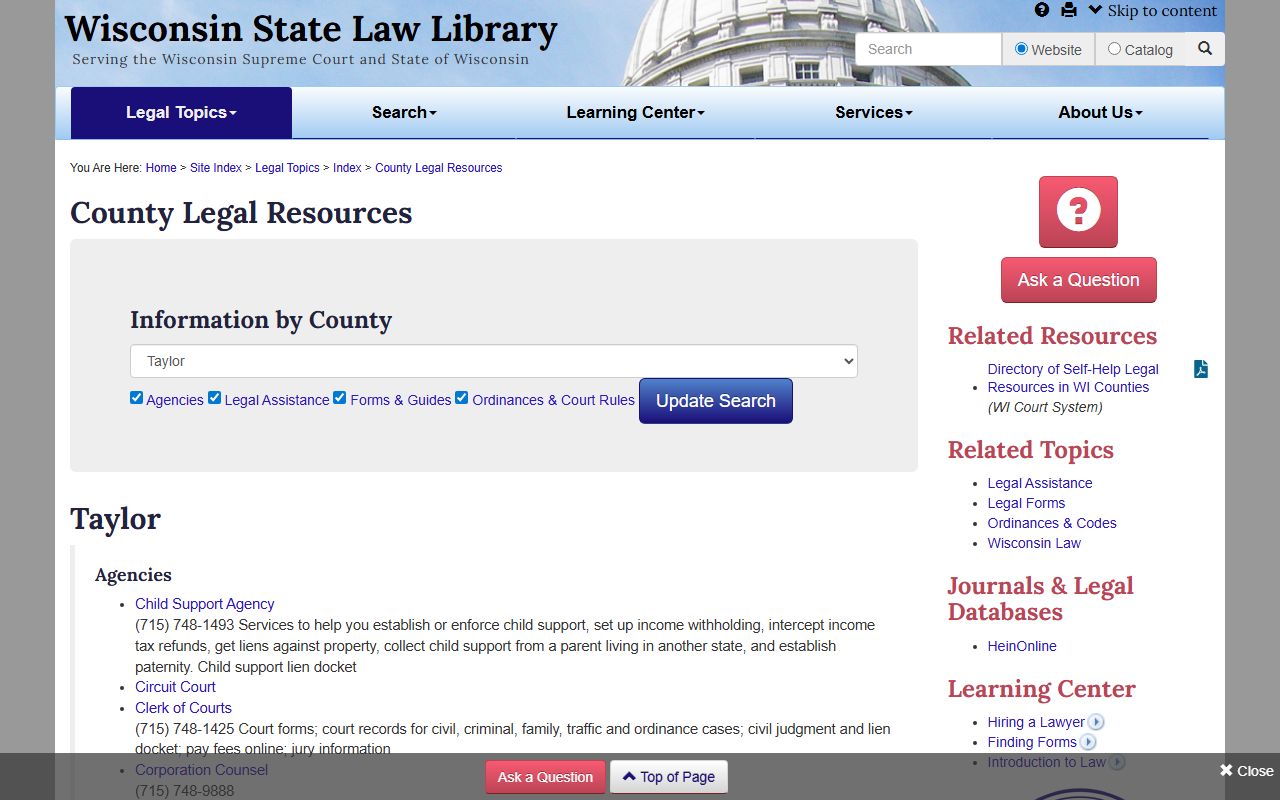
That directory gives you a local map for the clerk, court, and vital records contacts that matter when the online summary is not enough.
Taylor County Dissolution Of Marriage Copies
Taylor County follows the statewide split between a divorce decree and a divorce certificate. For divorces finalized before January 1, 2016, you need the decree from the Clerk of Circuit Court in the county where the divorce was granted. For divorces on or after that date, a certified divorce certificate may be issued through any Wisconsin Register of Deeds office. The register of deeds does not hold the court file, and it does not keep the decree. It handles the vital record side. That is why the document you need should drive the office you contact.
The Wisconsin Department of Health Services page at Wisconsin Vital Records Office gives Taylor County residents a second route for certified certificates. Orders can be placed by mail, online through VitalChek, or by phone at 877-885-2981. The state office is at P.O. Box 309, Madison, WI 53701-0309, with customer service at 608-266-1373. The state fee is $20 for the first copy and $3 for each additional copy of the same certificate. Applicants must show a direct and tangible interest and provide current identification.
The certificate can show that a divorce happened, but the decree remains the document that shows what the court ordered. That difference matters when another office wants the judgment language, the custody terms, or the final property ruling. If you need that level of detail, the clerk office is still the place to go. If you need the record for routine identification work, the certificate route is often faster and easier.
Once you know which side of the split you need, the request gets much cleaner. You can ask for the certificate, the decree, or both, and you do not have to guess at the wrong office first.
Taylor County Dissolution Of Marriage Forms
Family filings in Taylor County use the same statewide Wisconsin Court System forms used in every county. The family forms page at Wisconsin Court System family forms is the place to start when you need the summons, petition, financial disclosure, or other standard papers. The self-help page at Wisconsin Divorce Self-Help adds the Forms Assistant and the Basic Guide to Divorce and Legal Separation. Those tools are useful whether you are opening a new case or working from an existing case number. They also help with issues like maintenance, child support, custody, physical placement, and property division.
The research notes that attorneys must use e-filing in most Wisconsin case types, while self-represented filers can usually choose whether to e-file. That option matters because the filing path can change how fast the clerk receives the paper and how soon the docket updates. The forms assistant also helps keep the packet organized so the county clerk gets the right documents the first time. If you are trying to avoid a rejected filing, the state forms page is the safest place to check before you submit anything.
Taylor County Dissolution Of Marriage cases also sit under Wisconsin Statutes Chapter 767. The chapter covers residence rules, no-fault divorce, child custody, impoundment of records, and the 120-day waiting period before final hearing or trial. It also requires the court to tell the parties that they cannot remarry for six months after the judgment. Those rules shape the record from the first filing to the last order.
The county resource page and the state forms page work well together. One points you to local support, while the other gives the statewide forms and instructions that turn a blank packet into a filing.
Taylor County Dissolution Of Marriage Rules
Taylor County Dissolution Of Marriage cases follow the statewide family law rules used in every Wisconsin county. Section 767.301 requires a Wisconsin residence and a county residence before filing. Section 767.315 uses the no-fault standard, so the court looks for an irretrievably broken marriage instead of blame. Section 767.335 adds the 120-day wait before a final hearing or trial. Section 767.13 controls impoundment of records. Section 767.41 deals with custody and physical placement. Those rules shape both the path to judgment and the records that stay in the file.
WCCA helps you check the docket, but it does not give you the actual document images. That is why the clerk office still matters when you want the decree or a plain copy of the filings. For a newer certificate, the register of deeds or the state vital records office can be the faster route. For a pre-2016 divorce, the clerk office in the county where the case was granted remains the key source.
The practical path is simple. Check WCCA first, use the state forms page if you are filing, and then ask the clerk or the register of deeds for the exact record you need. That order keeps the request focused and cuts down on back and forth. It also helps when the case is old enough that you need to chase the file through more than one office.
Once the judgment is entered, the six month remarriage rule still applies, so the final order date is part of the record too.