
Search Wisconsin Dissolution Of Marriage
Wisconsin Dissolution Of Marriage records are split between court files and certificate records, so the best search path depends on what you need. A statewide case lookup can help you find the county, case number, and filing timeline. County clerks keep the full court file, judgment, and related filings. Register of Deeds offices and the state vital records office handle divorce certificates for qualifying requests. This guide brings those Wisconsin sources together, shows where public access starts, and explains how to move from a quick online search to a copy request at the right office.
Wisconsin Dissolution Of Marriage Overview
Wisconsin Dissolution Of Marriage Search
The fastest starting point is the official Wisconsin Circuit Court Access portal. WCCA gives free public access to Wisconsin case summaries from circuit courts across the state. A Wisconsin Dissolution Of Marriage search there can show a filing date, party names, case number, assigned court official, hearing history, and a running docket of key events. It is useful when you know only one spouse's name, when you are unsure which county handled the case, or when you want to confirm whether a divorce case reached judgment.
WCCA has limits. It does not post the full text of the summons, petition, financial disclosure forms, or the signed judgment. It points you to the case. Then the county clerk takes over. That distinction matters in Wisconsin. The online tool is for locating a case, while the county Clerk of Circuit Court is the office that keeps the actual file. If a case is older, archived, or no longer visible online, the courthouse may still have the complete file available for inspection.
For people who need appellate material, the Wisconsin court system directs users to a separate higher-court search portal. Most readers here will stay with circuit court sources because Wisconsin Dissolution Of Marriage cases begin and end in the county circuit court system. That is where divorce, legal separation, custody, placement, support, and property division records are created and stored.
This Wisconsin Circuit Court Access screenshot shows the statewide search page used for Wisconsin Dissolution Of Marriage lookups.
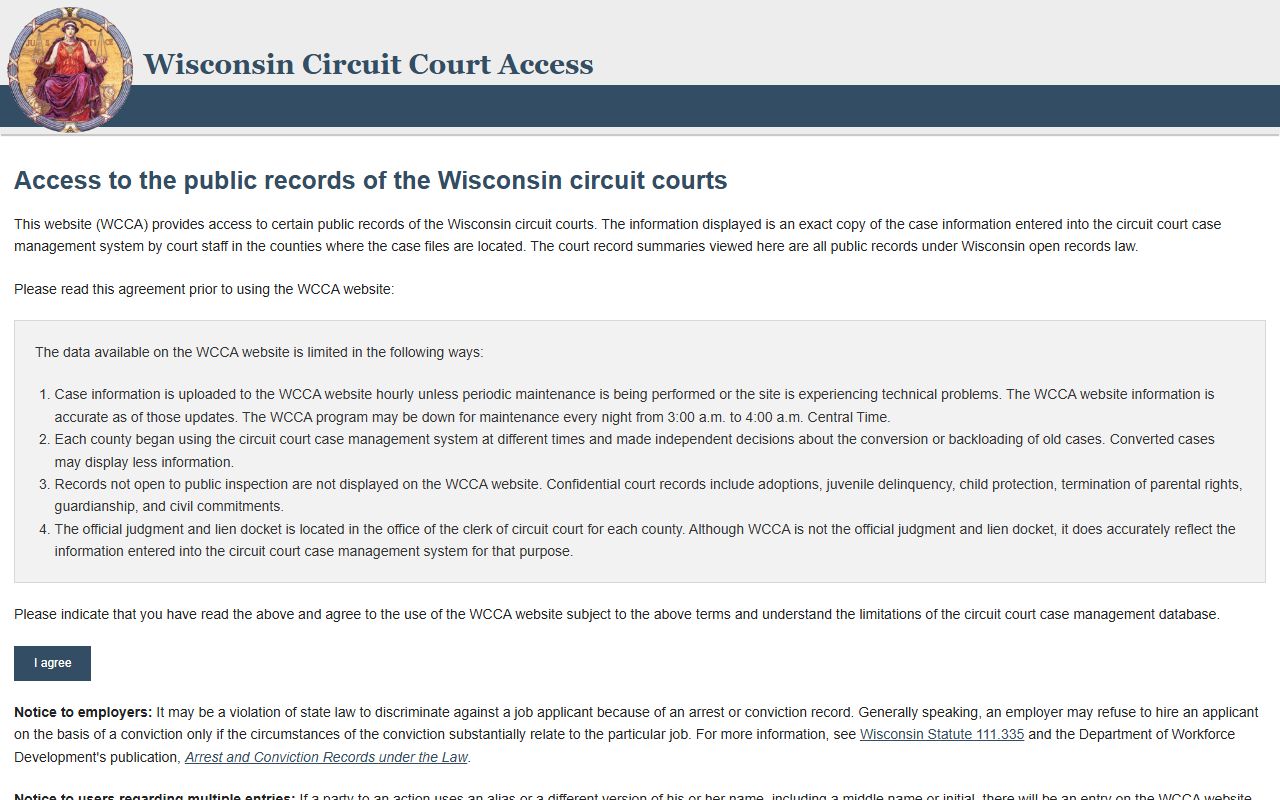
The portal is useful for statewide searches, but it is still only the first step when you need a decree, judgment, or certified court copy.
Wisconsin Dissolution Of Marriage Files
Wisconsin keeps two different record tracks. Court files live with the Clerk of Circuit Court in the county where the case was filed. Those files can include the petition, response, motions, notices, hearing dates, and the final judgment. A divorce certificate is something else. It is a vital record summary rather than the full court file. Wisconsin residents often need to decide which record they actually want before they make a request. If you need proof for a legal matter, a certified court judgment may be the right document. If you need a certificate for a limited verification purpose, the vital records route may be enough.
The Wisconsin Department of Health Services Vital Records office maintains divorce records from October 1907 forward at the state level. It accepts requests by mail, online through VitalChek, and by phone through VitalChek. The statewide issuance model also means any Wisconsin Register of Deeds office can issue qualifying divorce certificates for events on or after January 1, 2016. That does not mean every local office has the court file. It means Wisconsin has a broader certificate-issuance network for recent events.
The Wisconsin Register of Deeds Association explains why that split exists. Register of Deeds offices handle vital records and archival public records, but they do not keep divorce decrees or pleadings. Those stay with the court. In practical terms, a Wisconsin Dissolution Of Marriage certificate request goes through vital records channels, while a Wisconsin Dissolution Of Marriage court-record request goes through the county clerk.
This Wisconsin Department of Health Services image reflects the state office that issues Wisconsin Dissolution Of Marriage certificates and record guidance.
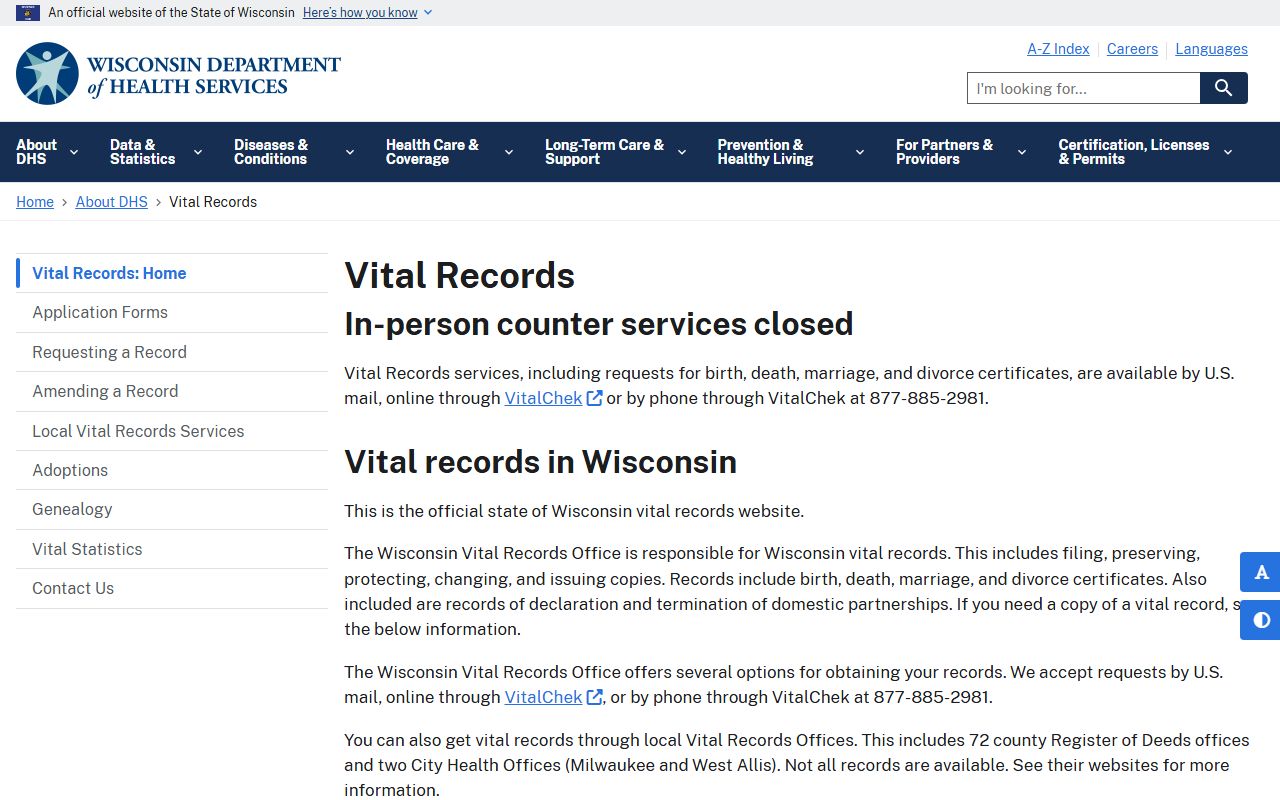
The state office is the right source for certificate ordering, but not for the full county court file.
This Register of Deeds source highlights the Wisconsin county offices that issue vital records for qualifying requests.
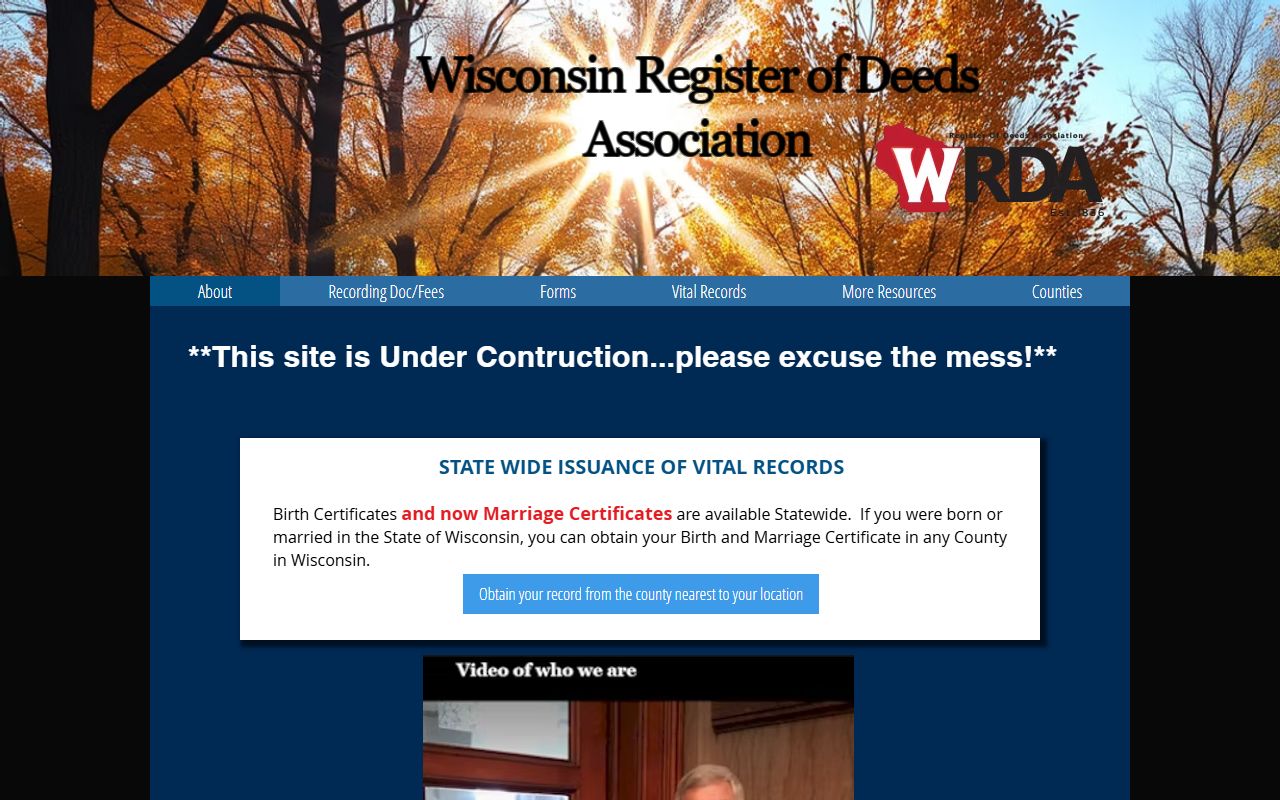
Use the Register of Deeds path when you need a certificate and meet the identification and direct-interest rules.
Get Wisconsin Court Copies
If you need the actual court paperwork, go to the county Clerk of Circuit Court. Wisconsin clerks keep public court records, provide public terminals for reviewing many electronic case files in person, and issue plain or certified copies. The county is critical. Divorce is filed in the county where one spouse has lived for at least 30 days, so a Wisconsin Dissolution Of Marriage search often becomes a county-specific request very quickly.
The Wisconsin Court System explains that the state's single-tier circuit court structure handles all family law matters. That includes divorce, legal separation, custody, support, and related proceedings. Court staff can help with procedure and access, but they cannot give legal advice. If a public terminal is available in the clerk's office, you may be able to confirm the case number there before asking for copies.
When you do not know where the divorce occurred, use WCCA first. When you know the county, contact the clerk directly. When you need a certificate rather than the full case, shift to a Register of Deeds office or the state vital records office. That three-step approach is often the cleanest way to search Wisconsin Dissolution Of Marriage records without wasting time on the wrong office.
This Wisconsin Court System homepage image shows the court network that supports county circuit court access for Wisconsin Dissolution Of Marriage records.
The statewide system helps you locate the right courthouse, but the county clerk remains the keeper of the actual divorce file.
Wisconsin Dissolution Of Marriage Certificates
A certificate request is more limited than a court-file request. The CDC's Wisconsin vital records guidance points requesters to the Wisconsin Vital Records Office at P.O. Box 309, Madison, WI 53701-0309 and notes that Wisconsin maintains divorce certificate records at the state level. The state customer service number is 608-266-1373. Those details matter when you need to verify a record, ask about an application, or confirm whether the event falls within state coverage.
Wisconsin also uses a direct-and-tangible-interest standard for certified copies. That means not every person can get a certified certificate just by asking. Identification is required. Online and phone orders typically move through VitalChek, which the state says adds a service fee. A mail request generally calls for an application, identification, payment, and a self-addressed stamped envelope. Wisconsin residents searching for a recent record can often choose between the state office and a county Register of Deeds office that participates in statewide issuance.
If the divorce happened before January 1, 2016, many Wisconsin counties direct requesters back to the Clerk of Circuit Court for the decree. That distinction appears again and again in county research. It is one of the most important practical details in any Wisconsin Dissolution Of Marriage search because it tells you when a certificate office can help and when only the courthouse can.
This CDC source image points to the statewide mailing route for Wisconsin Dissolution Of Marriage certificate requests.
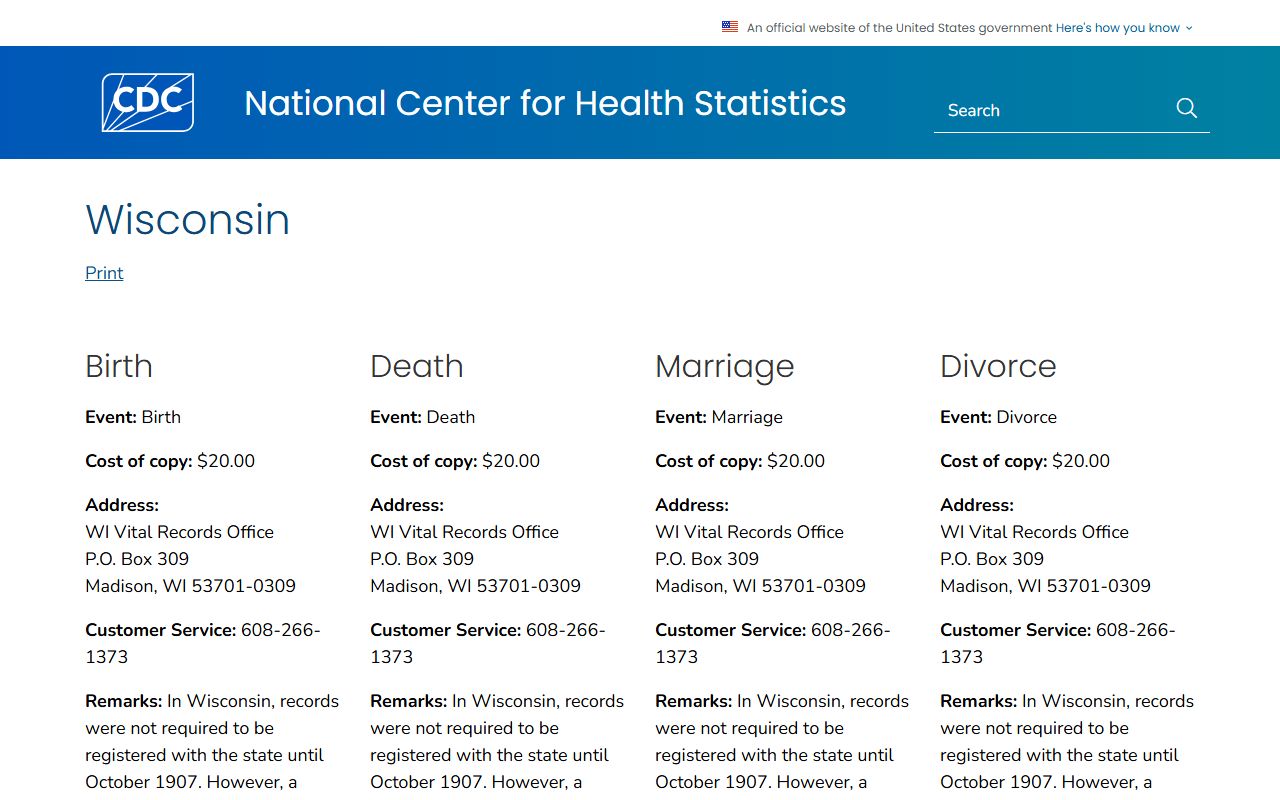
The federal guidance is useful for contact details, but the state and county sources provide the day-to-day instructions that Wisconsin residents usually need.
Wisconsin Dissolution Of Marriage Forms
The official Wisconsin Court System divorce self-help center is the main statewide forms hub for new and existing family cases. It links users to the Forms Assistant, the Basic Guide to Divorce or Legal Separation, and procedural help on service. These tools matter because the record you search for later starts with the forms that were filed. In Wisconsin, standardized family forms are used across all 72 counties, so a filer in Milwaukee, Adams, or Ashland starts from the same statewide base set.
The Wisconsin Circuit Court eFiling portal also belongs in the discussion. Attorneys must e-file in most circuit court matters, while self-represented parties may choose whether to use the system in many family cases. E-filing does not replace the clerk. It changes how documents enter the case. Once filed and processed, those records still become part of the circuit court file governed by Wisconsin rules on access, retention, and confidentiality.
The Wisconsin State Law Library divorce guide adds practical help that many county pages rely on. It gathers procedural guides, county resources, service information, and research tools. That page is especially helpful when you know you are dealing with a Wisconsin Dissolution Of Marriage matter but are not yet sure which form packet, service guide, or county office to use.
This self-help image reflects the official Wisconsin tools used for Dissolution Of Marriage forms and instructions.
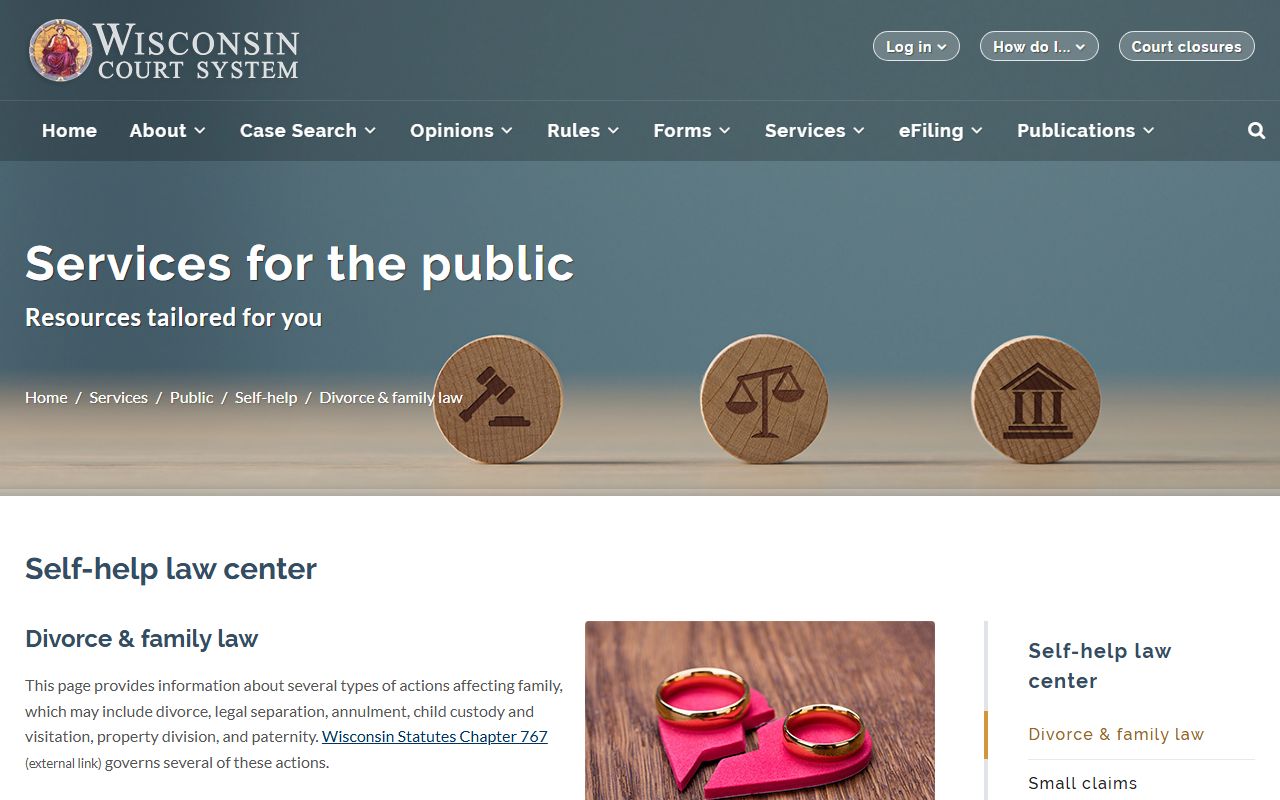
Those self-help resources are often the best bridge between a public records search and the filing process that created the court file.
This eFiling portal image shows the Wisconsin system used to submit many circuit court filings, including family law documents.
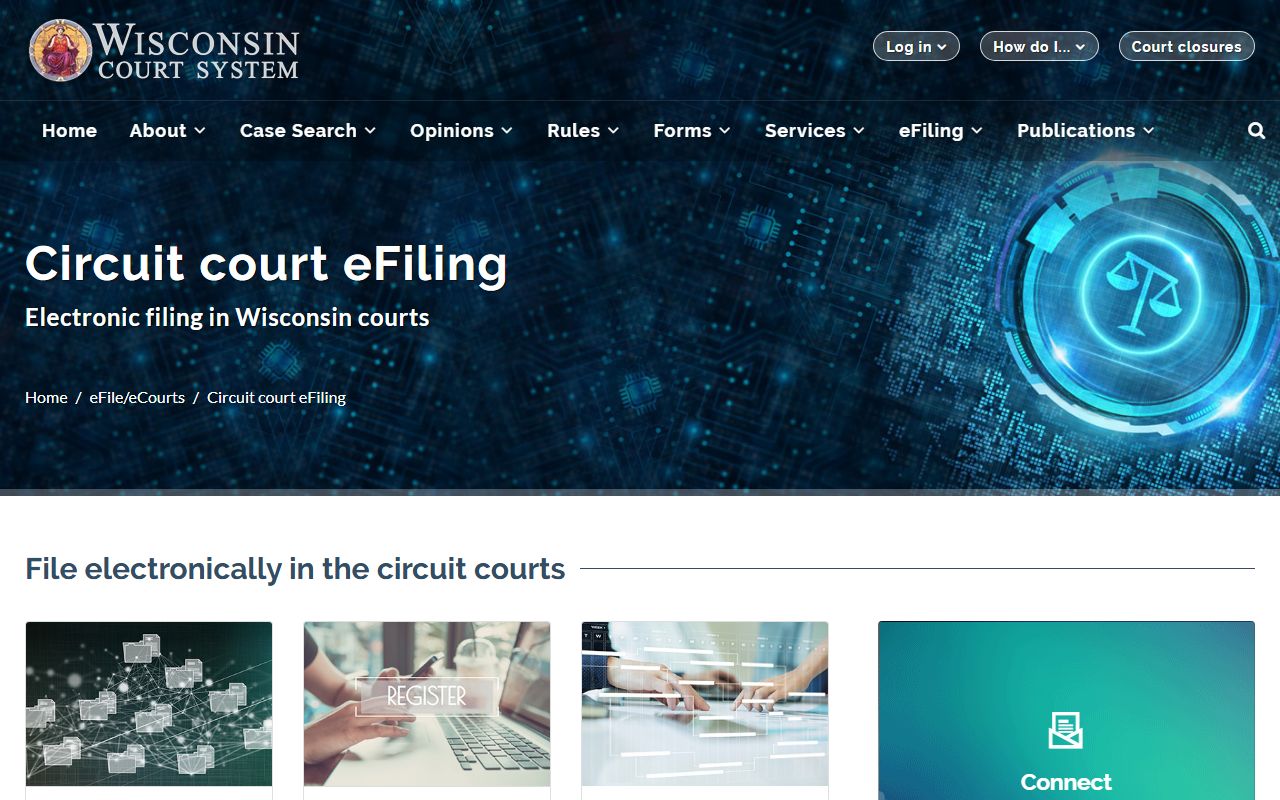
E-filing changes the intake method, but the county court still controls the public record after filing.
Wisconsin Dissolution Of Marriage Rules
The core law is Wisconsin Statutes Chapter 767. It governs the residence rules, procedure, waiting period, judgment, and many of the custody and support issues tied to a divorce case. A Wisconsin Dissolution Of Marriage action generally cannot begin unless one spouse has lived in Wisconsin for six months and in the filing county for 30 days. That county requirement is why local pages matter so much on this site.
Wisconsin Statute 767.315 sets out the no-fault grounds for divorce and legal separation. Wisconsin focuses on whether the marriage is irretrievably broken rather than proving blame. Wisconsin Statute 767.335 adds the 120-day waiting period before final hearing or trial, measured from service of the summons and petition or the filing of a joint petition. Those are not abstract rules. They affect the timeline of the record itself, from first filing to final judgment.
Public access and privacy move together in Wisconsin family cases. Wisconsin Statute 767.13 says family court records generally may not be impounded without a written court order and good cause. At the same time, Chapter 767 requires confidential financial disclosures in divorce actions. That is why a Wisconsin Dissolution Of Marriage case can be public in broad terms while still keeping some financial material, personal identifiers, or child-related material out of open public view.
For cases involving children, Wisconsin Statute 767.41 governs custody and physical placement. It addresses the best-interest standard, parenting plans, and the presumption in favor of joint legal custody in many situations. Even readers who only want records should know that custody and placement issues often shape the filings, hearings, and motion practice found in a Wisconsin Dissolution Of Marriage case file.
This Chapter 767 image points to the main Wisconsin law used throughout Dissolution Of Marriage cases.
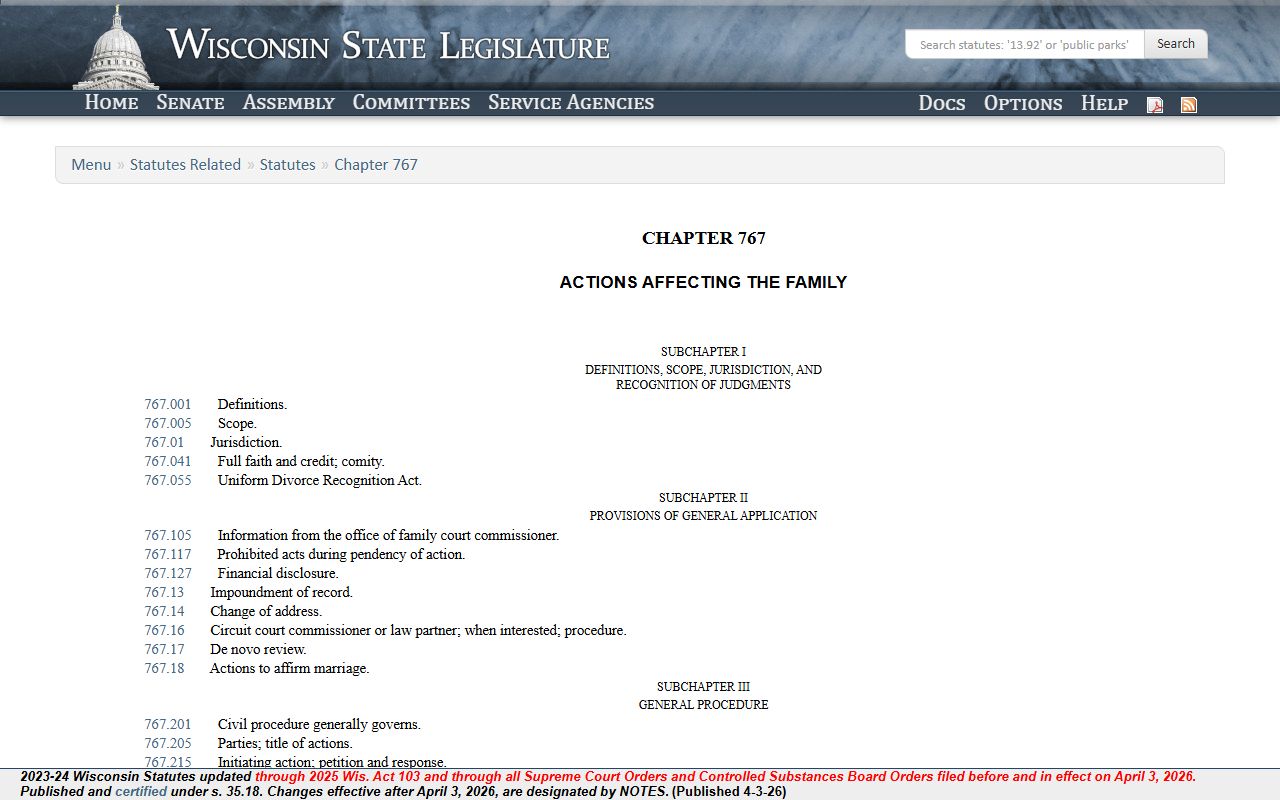
Chapter 767 is the backbone of the filing process, access rules, and judgment structure that shape every county divorce file.
This grounds-for-divorce source highlights the no-fault rule used in Wisconsin Dissolution Of Marriage proceedings.
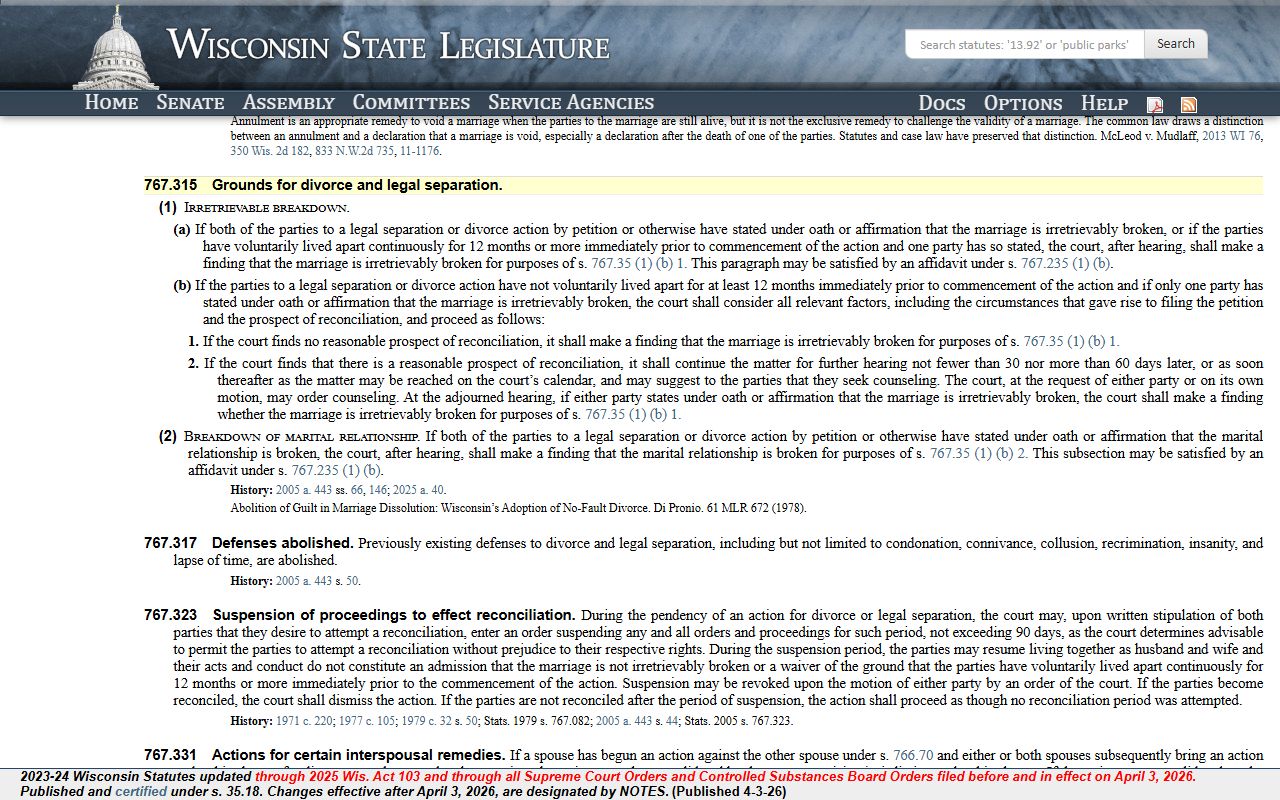
The key takeaway is simple: Wisconsin does not require fault allegations to open or finish a divorce case.
This waiting-period image points to the 120-day rule that controls timing in Wisconsin Dissolution Of Marriage cases.
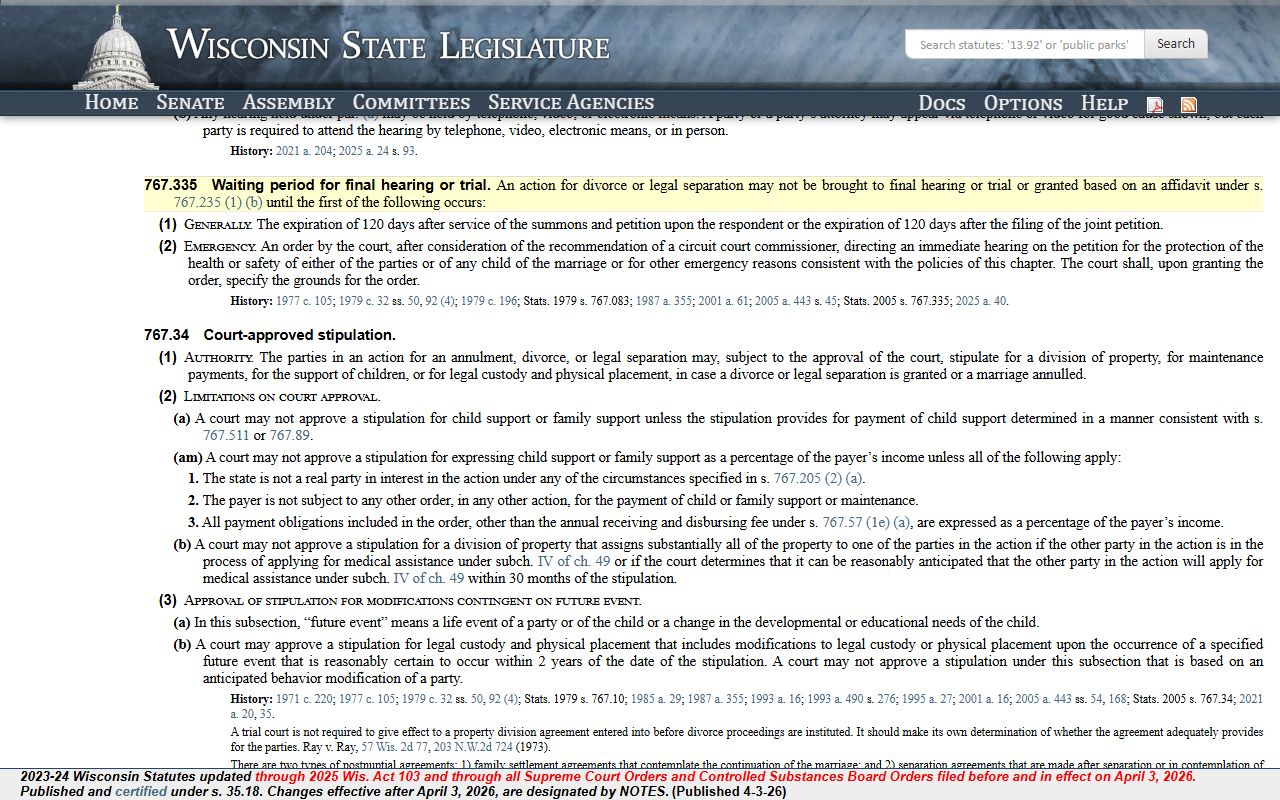
That waiting period often explains why a case appears online for months before the final judgment is entered.
This impoundment statute image relates to when Wisconsin Dissolution Of Marriage records may be sealed for good cause.
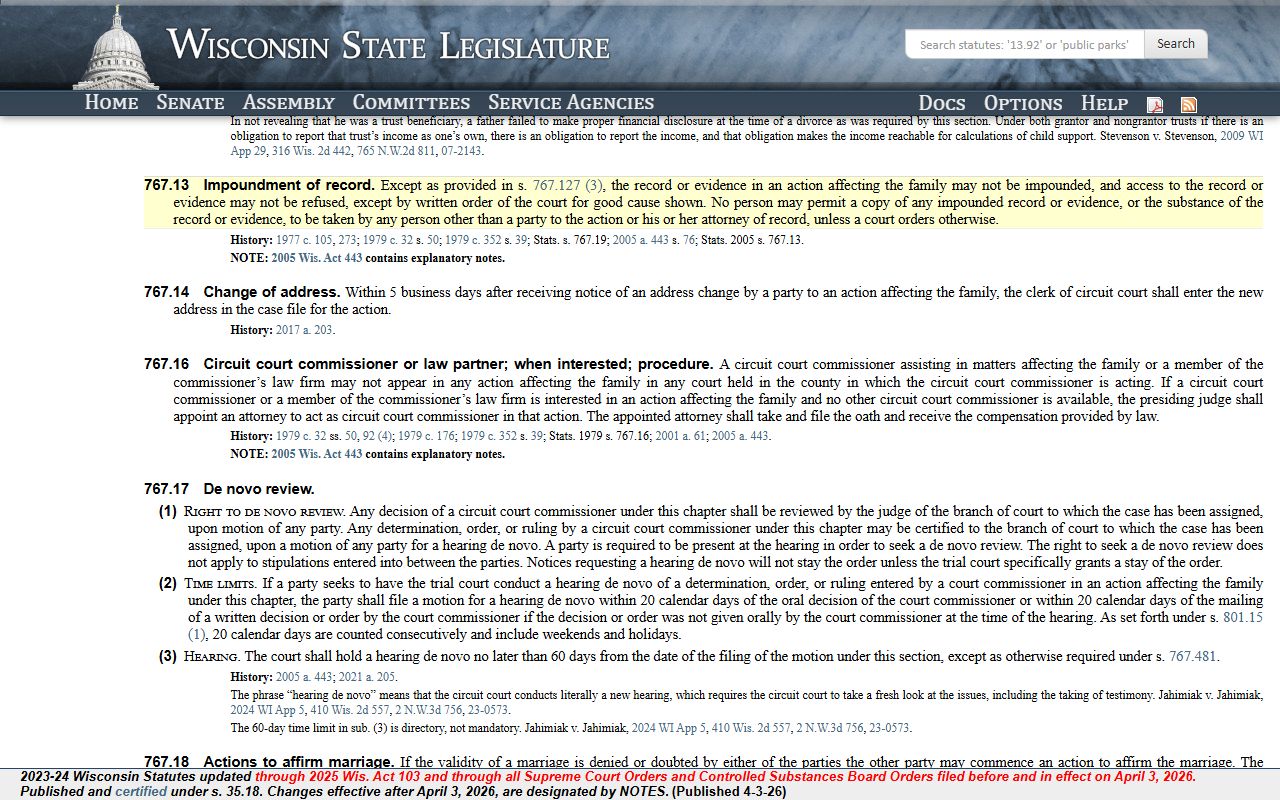
Sealing is possible, but it requires a court order. Clerks do not create that restriction on their own.
This custody statute image covers child placement issues that often appear in Wisconsin Dissolution Of Marriage files.
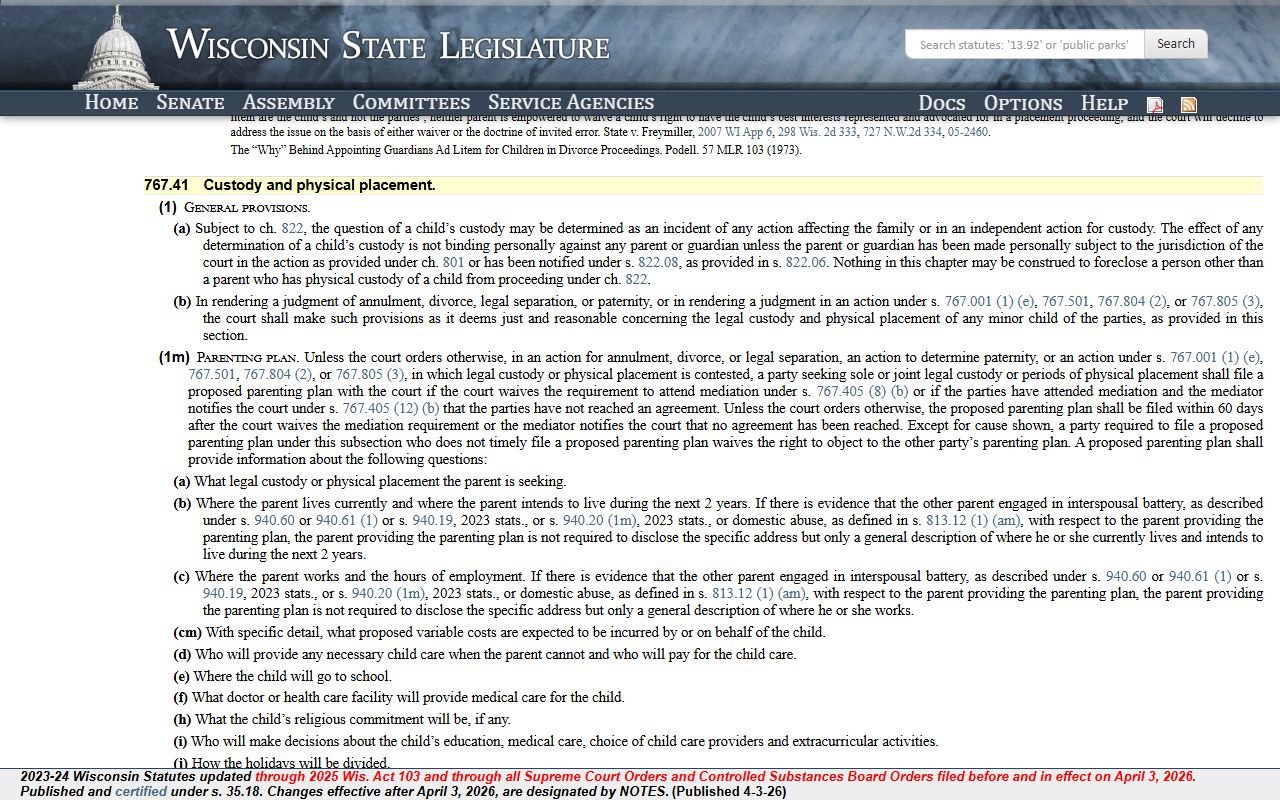
When children are involved, these custody rules often generate many of the most important filings in the court record.
Are Wisconsin Records Public
In broad terms, yes. Wisconsin court records are public, and the state court system says public access is a core feature of the circuit court structure. WCCA exists because that public-access principle applies to routine court information statewide. But a Wisconsin Dissolution Of Marriage file is not public in exactly the same way from top to bottom. A docket entry may be public while a confidential financial document is restricted. A case may be searchable online while the actual papers still require an in-person request at the courthouse.
That is why Wisconsin searchers should think in layers. The public can often identify a case, see its status, and ask for records without being a party. At the same time, sealed records, sensitive identifiers, and some child-related material may be withheld or redacted by law or court order. The county clerk's role is to provide access within those limits. The state portals help you find the case. The statutes tell you why some parts remain open and some do not.
Note: Wisconsin Dissolution Of Marriage records are generally public, but not every document in a family case will be open for copying or online display.
Browse Wisconsin Dissolution Of Marriage by County
County pages on this site focus on the local clerk, Register of Deeds path, county-specific contact details, and research-backed record access notes. Start with the county where the case was filed, or use the statewide search first if you are still narrowing it down.
Wisconsin Dissolution Of Marriage in Cities
City pages explain the same core point in local terms: Wisconsin cities do not keep divorce files themselves. The county circuit court does. City pages help connect residents to the right county office and highlight any city-specific context from the research.