
Search Door County Dissolution Of Marriage
If you are trying to find Door County Dissolution Of Marriage records, the county clerk, the register of deeds, and the statewide court tools each cover a different piece of the path. Some people need the court file. Some need a newer certificate. Some just want the public summary so they can confirm the case before they call the courthouse. Door County keeps those routes fairly clear, which helps when you are trying to avoid the wrong desk. This page brings the local and state steps together so you can move from search to request in a simple order.
Door County Dissolution Of Marriage Records
The Door County Clerk of Circuit Court is the official custodian of divorce decrees and related court files. The research says to visit the Clerk of Circuit Court office at the Door County Courthouse to obtain certified copies or review case files. It also says the clerk maintains records of all filed documents, keeps the court proceedings record, and can charge $1.25 per page for copies. Certified copies cost $5 per document plus the page charge. If you do not provide a case number, the clerk may charge a $5 search fee per name searched. Prepayment may be required for larger or off-site requests. That makes the clerk the main source for the actual file.
For a public look, WCCA at wcca.wicourts.gov gives you the case summary, the parties, and the docket trail. It does not show the actual court documents. That is why the clerk office still matters even when the online summary is enough to confirm the case exists. The county clerk page in the research is listed as Door County Clerk of Circuit Court, which is also the state court homepage the research uses for the county clerk and register of deeds entries.
The online summary is useful. The file at the courthouse is still the source of record.
The county law library directory is also useful if you need a quick local reference before you call or visit.
Door County Dissolution Of Marriage Copies
Door County follows Wisconsin's statewide vital records split. For divorces finalized before January 1, 2016, the decree must come from the Clerk of Circuit Court in the county where the divorce was granted. For divorces on or after that date, a certified divorce certificate can be obtained from any Wisconsin Register of Deeds office. Applicants must have a direct and tangible interest and current identification. The Register of Deeds maintains vital records, but it does not keep divorce court files, pleadings, or decrees. That is why the certificate route and the court-file route stay separate.
The Wisconsin Department of Health Services page at Wisconsin Vital Records Office gives the state order options. Orders can be made by mail, online through VitalChek, or by phone at 877-885-2981. The state fee is $20 for the first certified copy and $3 for each additional copy of the same certificate. The office is at P.O. Box 309, Madison, WI 53701-0309, with customer service at 608-266-1373. That makes the state office a practical option when you do not need the full court file or when you are ordering from outside Door County.
The Wisconsin Vital Records Office page is here: Wisconsin Vital Records Office. The state court homepage is here: Wisconsin Court System.
Use the certificate route when the receiving office wants proof of the divorce event. Use the clerk file when the other side needs the actual judgment.
Door County Dissolution Of Marriage Forms
Door County divorce filings use the statewide Wisconsin Court System family forms. The forms page at Wisconsin Court System family forms explains that the same forms are used across all circuit courts and that they follow the required eFiling format. The self-help page at Wisconsin Divorce Self-Help gives the forms assistant, the basic guide, and the steps for a new divorce or legal separation case. That helps if you are filing for the first time or need to understand where a response or later motion fits into the record.
The county research also says the clerk office protects reasonable access to records while keeping confidential records sealed as required by law and court order. That balance matters in family cases because financial disclosure, custody, and later motions can bring privacy questions. The forms and the rules work together. The county office handles the file. The statewide pages help you prepare the forms correctly before the file is created.
All of that sits under Wisconsin Statutes Chapter 767. The residence rule, the no-fault ground, the 120-day wait, the impoundment rule, and the custody provisions all shape the case from filing to final judgment.
That county structure is easiest to see when you look at the local legal resources directory and the forms pages side by side.
The legal resources directory is here: Door County legal resources.
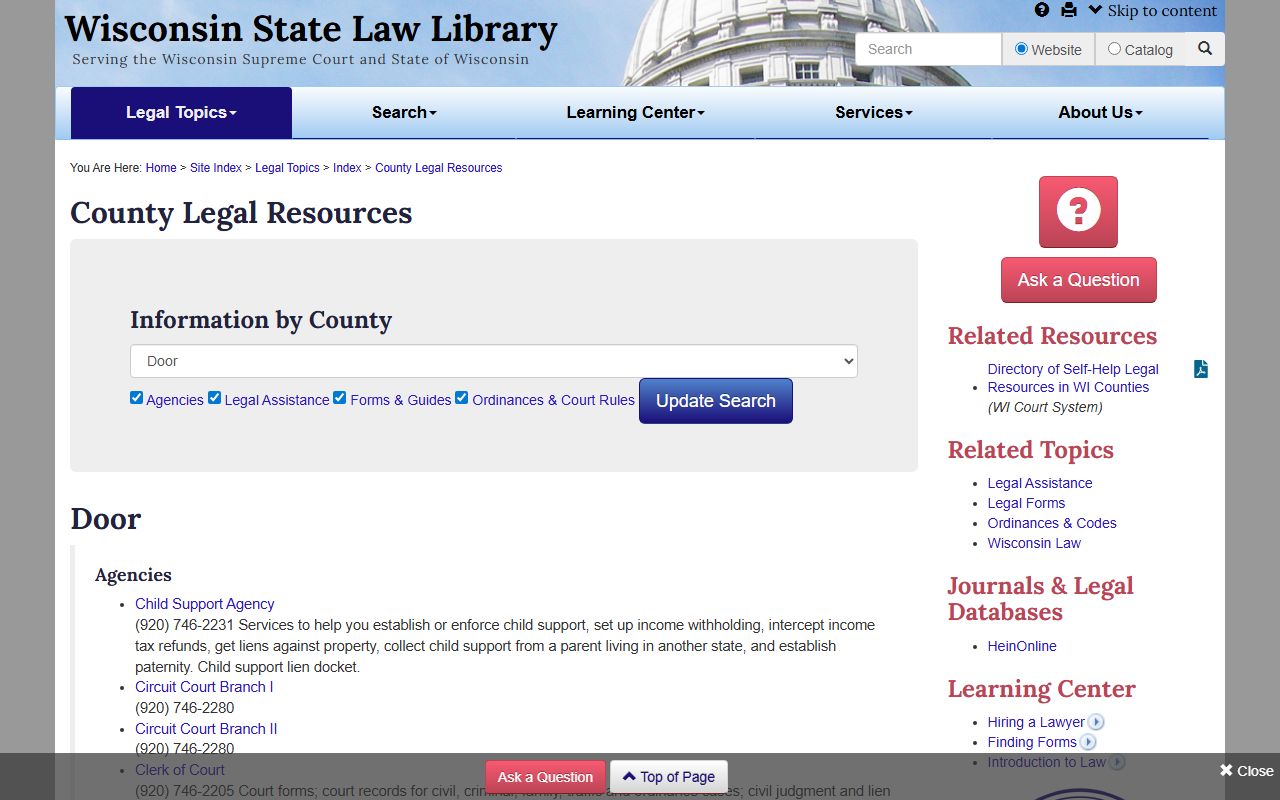
That directory is a clean way to reach the local court and county record offices from one page.
Door County Dissolution Of Marriage Rules
Door County Dissolution Of Marriage cases follow the same Wisconsin law used statewide. Section 767.301 requires a Wisconsin residence and a county residence before filing. Section 767.315 sets the no-fault rule. Section 767.335 creates the 120-day wait before final hearing or trial. Section 767.13 covers impoundment of family court records. Section 767.41 covers custody and physical placement. Those rules are part of the case file from the start, which is why the clerk office remains the key source when you need the decree or the court papers.
WCCA is useful for checking the public summary, but it does not replace the file. If you are trying to confirm the status of a Door County case, it can give you the parties and docket path fast. If you need the actual judgment, the courthouse is still the right place. That is also why the county directory matters. It gives you a quick map of the offices that handle records, forms, and support.
The easiest way to handle a Door County search is to start with WCCA, move to the forms page if you are filing, and then use the clerk or register of deeds for the record you actually need. That keeps the request aimed at the right office from the beginning.
Once the judgment is granted, the six month remarriage restriction still applies under Wisconsin law, so the judgment date is important too.