
Clark County Dissolution Of Marriage
Clark County residents who need Dissolution Of Marriage records usually begin with the Clerk of Courts at the courthouse, then check WCCA for a summary, and then move to the Register of Deeds only if the request is for a qualifying certificate. The county keeps the actual court file with the clerk. That matters because a record search is not the same thing as a certificate request. Once you know the difference, Clark County is easy to navigate. The real work is knowing which office holds the document you want.
Clark County Dissolution Of Marriage Records
The official Clark County Clerk of Courts page says the mission is to create, maintain, dispose, and preserve the written record of all proceedings before the circuit court system. It also says the office cannot give legal advice. The courthouse address is 517 Court Street, Room 405, Neillsville, WI 54456, and the phone number is (715) 743-5181. That is the main office for court files, record access, and the public side of divorce case work.
Use the county law library directory at Clark County Legal Resources to see the wider support network. The directory lists the Clerk of Court at (715) 743-5181, the County Clerk at (715) 743-5148, the Family Court Commissioner at (715) 267-7249, the Register of Deeds at (715) 743-5163, and the Victim/Witness Assistance Program at (715) 743-5270. That is a useful map when a Dissolution Of Marriage request starts as one question and becomes three.
Clark County keeps court records for civil, criminal, family, traffic, ordinance, and related case types. That means the clerk is the home base for the divorce file. If you need a docket note, a motion, or the final judgment, the clerk is the right stop.
The Clark County Clerk of Courts page explains the office mission and duties at Clark County Clerk of Courts.
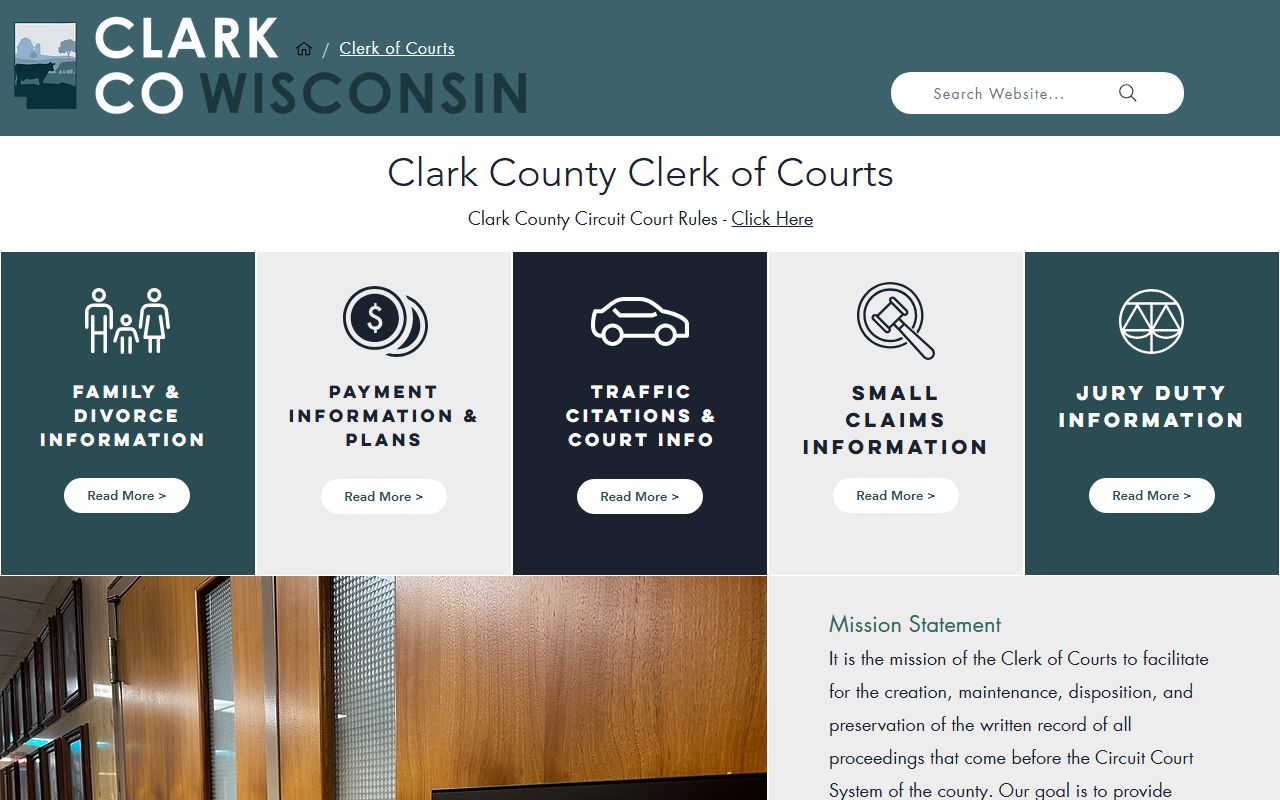
Use that office for the county file, the public record path, and the main court questions.
Clark County Dissolution Of Marriage Search
For a quick case lookup, use Wisconsin Circuit Court Access. Clark County cases can be searched by choosing Clark from the county menu and entering a party name, business name, or case number. WCCA gives the summary, the docket trail, and the status. It does not display the full text of filings. That is the key limit. It helps you find the file, but it does not replace the clerk.
The statewide self-help page at Wisconsin Divorce Self-Help is the other basic tool. It explains the forms assistant, the basic guide, and the standard family forms used in divorce and legal separation cases. Clark County filers use the same statewide forms as the rest of Wisconsin. The forms assistant covers maintenance, child support, legal custody, physical placement, and property division, so it is a practical starting point before any filing is made.
The Wisconsin court system homepage at wicourts.gov is the broader entry point for state court information, public records tools, and related services.
Use this quick checklist before you search:
- One spouse's full name
- Approximate filing year
- Case number, if known
- Clark County as the filing county
Note: WCCA gives the public summary only, so the clerk remains the office for the actual court file and the judgment copy.
The county legal resources directory adds local help and forms for Clark County at Clark County Legal Resources.
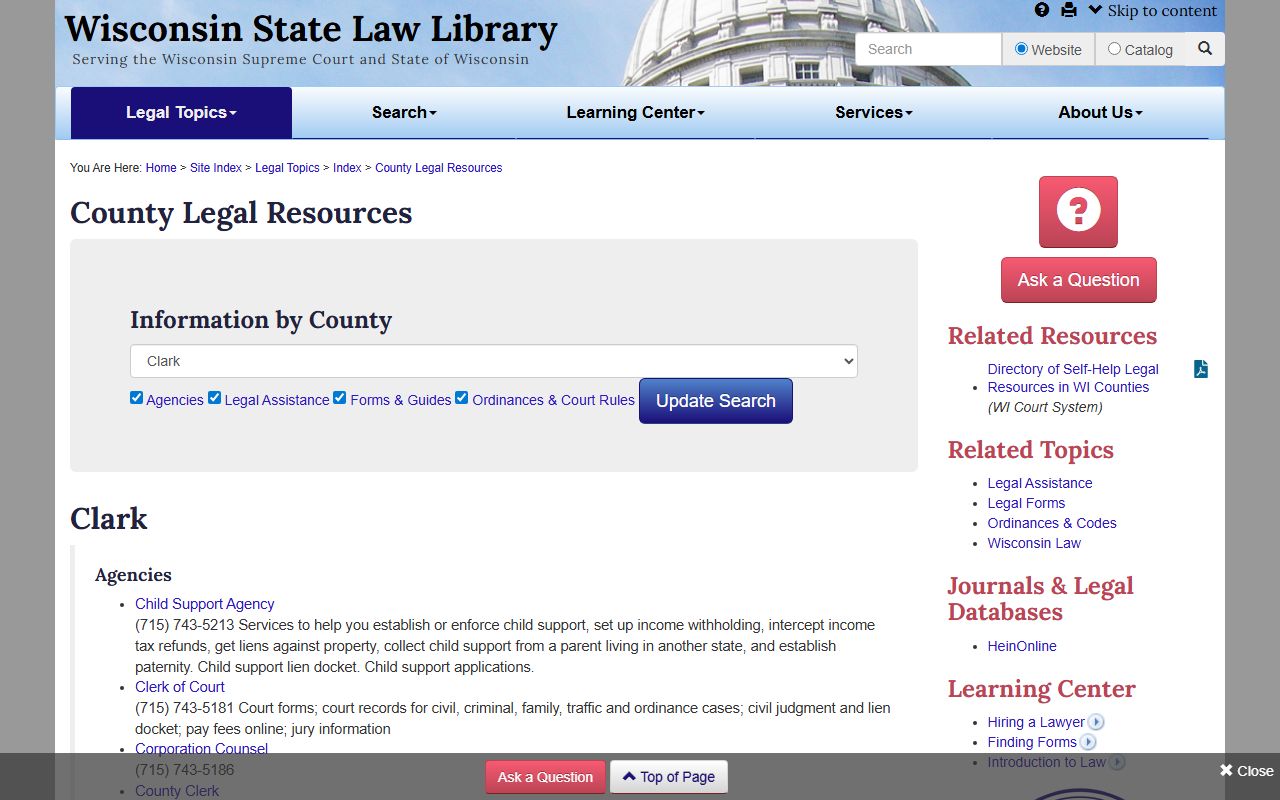
That guide is useful when a divorce question turns into a forms question or a local help question.
Clark County Dissolution Of Marriage Certificates
Clark County uses the same statewide certificate split as the rest of Wisconsin. For divorces on or after January 1, 2016, a Register of Deeds office can issue a divorce certificate. For older divorces, the Clerk of Circuit Court in the county where the divorce was granted still holds the decree. That split is simple, but it keeps the certificate path separate from the court file path.
The county law library directory lists the Clark County Register of Deeds at (715) 743-5163. The directory also lists birth, marriage, and death records under that office, which shows where the vital-record side of the search goes. For state-level ordering, use DHS Vital Records. The state office accepts mail, online, and phone orders, charges $20 for the first certified copy and $3 for each extra copy, and requires a direct and tangible interest plus current ID.
If you need the court file rather than the certificate, the clerk is still the right office. The Register of Deeds does not hold divorce decrees or pleadings. It issues the certificate only. That distinction matters in Clark County just as much as it does anywhere else in Wisconsin.
Clark County legal resources list the county contacts and local family help at Clark County Legal Resources.
That directory is a quick way to see the clerk, commissioner, victim help, and records offices together.
Clark County Dissolution Of Marriage Forms
The statewide forms page at wicourts.gov/forms1/circuit.htm#family is the forms source for Clark County family cases. Wisconsin circuit courts require those forms, and the page includes the directory of available forms and basic filing help. It is the place to start when you need the right packet for a new case, a post-judgment motion, or a legal separation filing.
Clark County's law library guide points to local forms and guides that matter in family cases. It lists the Language Assistance Program, the Victim/Witness Assistance Program, child support applications, small claims procedures, traffic court information, and birth, marriage, and death record applications. It also points to Indianhead Community Action Agency, which provides legal assistance for victims, including divorce, child custody and placement, and restraining orders. That kind of local support can help when the record search is tied to a larger family issue.
Chapter 767 of the Wisconsin Statutes is the legal backbone. It covers residence requirements, no-fault grounds, financial disclosure, impoundment, waiting periods, judgments, custody, and placement. In Clark County, the clerk follows that framework when it records the case and when it makes the public file available. The rules may sound formal, but they shape every step of the record path.
Note: The clerk and the county help pages can guide the process, but they cannot give legal advice about how to use the forms.
Clark County Dissolution Of Marriage Access
Clark County access works best when you separate the record types. The clerk handles the full court file. WCCA handles the public summary. The Register of Deeds handles the newer certificate path. If you keep those three roles separate, the request stays on track. That matters when the case is old, when the file is large, or when you only need a certified copy.
The clerk office is also the first stop for questions about filing procedures, court records management, and public access to circuit court records. The law library directory adds the County Clerk, the Family Court Commissioner, the Register of Deeds, and the Victim/Witness Assistance Program as nearby support points. If one office does not have the answer, the county map points to the next office.
Most Clark County residents will do best by searching WCCA first, then calling the clerk with the names and dates, and then going to the Register of Deeds only when the request is for a qualifying post-2016 certificate. That sequence keeps the search efficient and avoids asking the wrong office for the wrong document.